Quick Answer
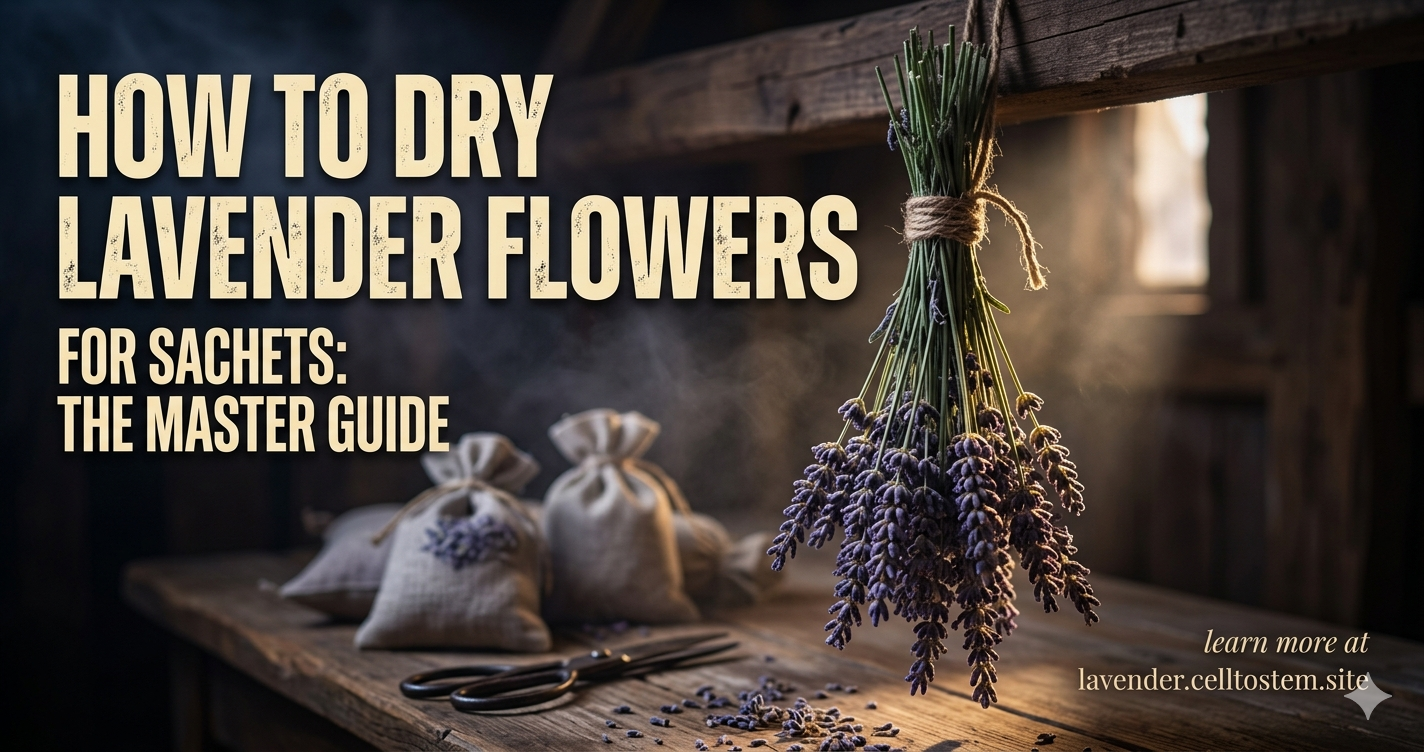
To dry lavender flowers for sachets, harvest the stems when only the bottom third of the flower spikes have opened. Bundle 10–20 stems with a rubber band and hang them upside down in a dark, warm, well-ventilated spot for 7–14 days. Once the buds feel brittle and pop off easily, they are ready to be stripped and sewn into breathable cotton or linen sachets.
The Scent of Success: Why Lavender Matters
There is something deeply grounding about the smell of real lavender. It isn’t like those synthetic “mountain breeze” sprays you find at the grocery store. It’s earthy, sweet, and clean. Over the years, I have turned my small backyard garden into a lavender sanctuary, but my journey wasn’t always successful.
When I first started learning how to dry lavender flowers for sachets, I made the classic amateur mistake: I waited until the whole field was a vibrant purple sea before picking. I thought more color meant more scent. I was wrong. By the time I hung those beauties up, the oils had already started to dissipate, and the flowers fell apart into a dusty mess.
Through trial, error, and many “dusty” closets, I’ve perfected the lavender drying process. Whether you want to freshen your linens or you’re looking for the best lavender sachet gift ideas, getting the drying stage right is the difference between a sachet that lasts two weeks and one that lasts two years.
Choosing Your Variety: Not All Purple is Equal
If you are growing your own or buying from a farm, you need to know that not all lavender is created equal. If your goal is scent and longevity, you need to find the best lavender for drying for sachets.
In my experience, Lavandula angustifolia (English Lavender) is the undisputed king. Varieties like ‘Munstead’ or ‘Hidcote’ have a sweet, delicate aroma that stays “true” even after drying. If you use French lavender (Lavandula x intermedia), like ‘Grosso’, you get a much stronger, camphorous scent. While French varieties produce more oil, they can sometimes smell a bit like medicine if you aren’t careful. However, ‘Grosso’ is the best lavender for sachets to repel moths because that high camphor content is exactly what those pesky closet-dwellers hate.
Timing is Everything: The Best Harvest Window
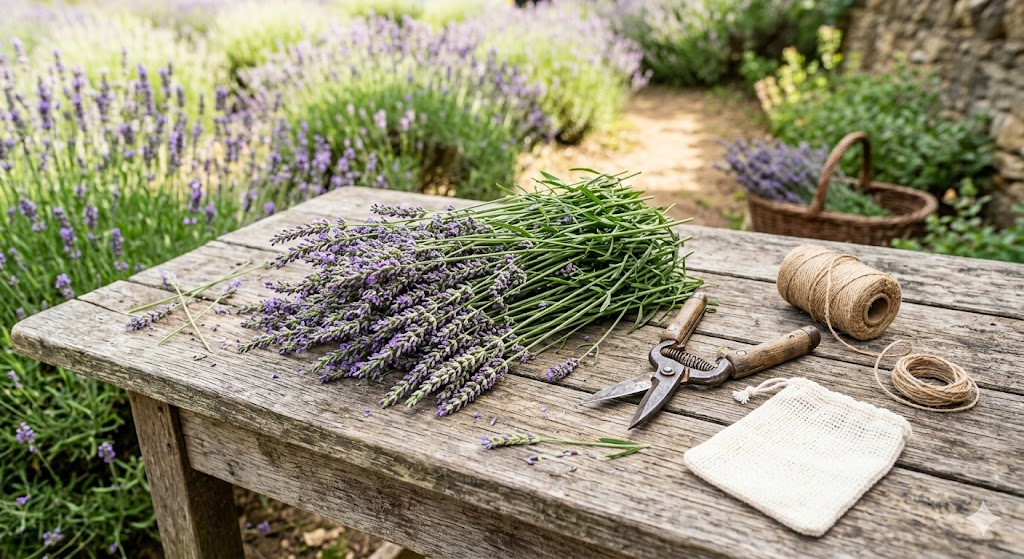
You cannot just walk out into the garden whenever you feel like it. The best time to harvest lavender for sachets is a very specific window.
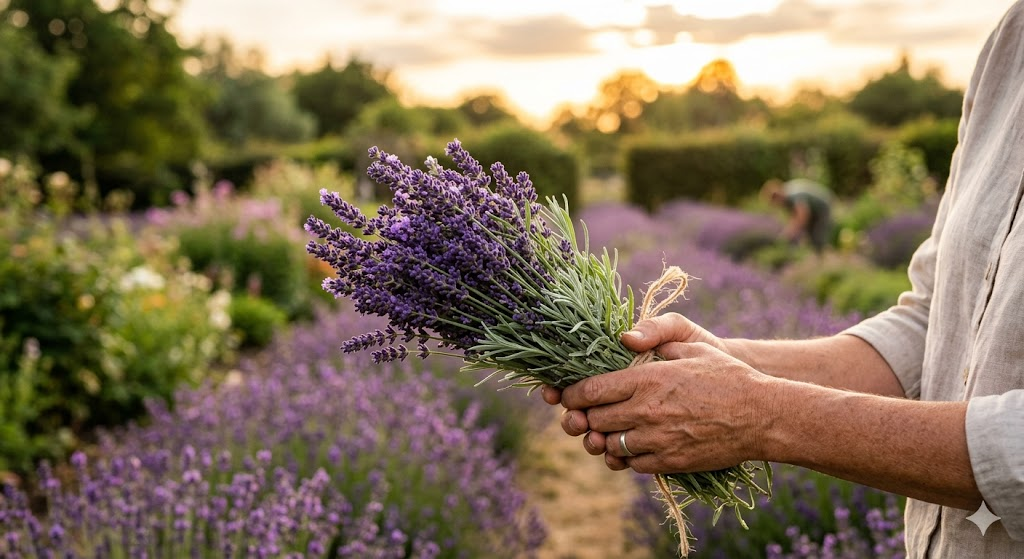
You want to cut the stems when the buds are full of color but only the very bottom one or two flowers on the spike have actually opened. If the whole spike is in bloom, the bees are happy, but your sachets will be messy. At this “early bloom” stage, the essential oils are at their peak concentration.
Pro Tip: Always harvest in the mid-morning, right after the dew has evaporated but before the heat of the afternoon sun begins to pull the oils out of the plant. I once harvested in the damp evening after a light rain; despite my best efforts, that entire batch succumbed to mold within four days. Lesson learned: moisture is the enemy of preserving lavender flowers.
The Best Way to Dry Lavender Flowers for Sachets
I have tried every “hack” in the book. I’ve used dehydrators, ovens, and even microwaves. While those methods are fast, they are rarely the best way to dry lavender for sachets scent. High heat damages the delicate chemical compounds that give lavender its calming properties.
The Hanging Method (The Gold Standard)
This is the best method to dry lavender for sachets if you want to maintain the color and the essential oil profile.
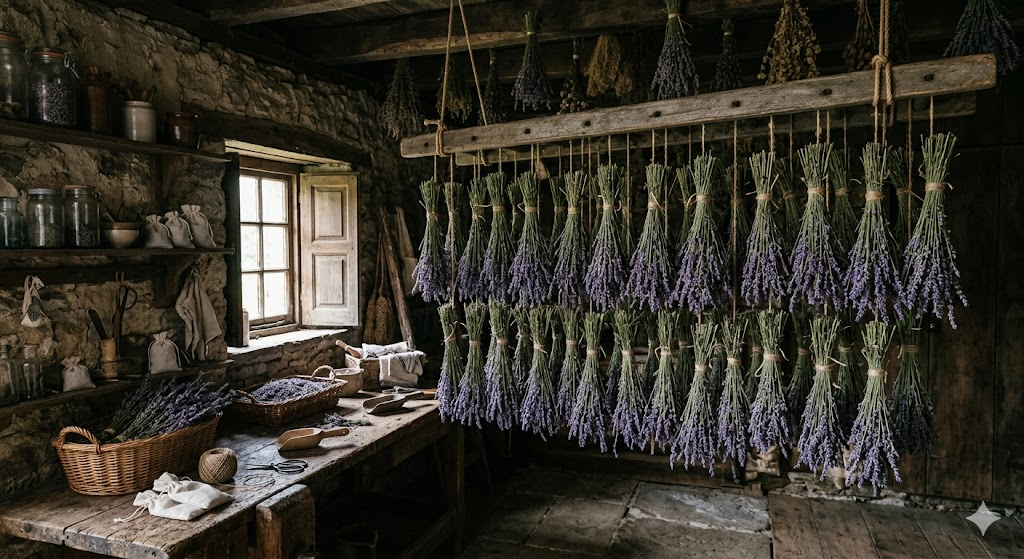
- Bundle Small: Take about 15–20 stems. If the bundles are too thick, the center won’t get enough airflow and might rot.
- The Rubber Band Trick: Use a rubber band to tie the stems, then loop your twine through it. As the stems dry, they shrink. If you use only string, the stems will eventually slip out and fall on the floor. A rubber band stays tight.
- Go Dark: Find a spot that is dark and warm. Sunlight bleaches the purple right out of the flowers, leaving them a dull gray.
- Airflow: I use a simple DIY setup, but if you have a large harvest, investing in the best drying rack for lavender sachets (usually a mesh multi-tier hanging rack) is a lifesaver. It allows air to circulate 360 degrees.
Troubleshooting the Crunch
How do you know it’s done? Take one stem and rub a bud between your fingers. It should “pop” off the stem cleanly and feel brittle, not bendy. Usually, this takes about 10 days in a dry climate. If you live in a humid area, you might need a small fan running in the room to keep the air moving.
The Lavender Sachet Tutorial: From Stem to Sachet
Once your dried lavender flowers are ready, it’s time for the fun part. Stripping the buds is a sensory experience. I usually put on a podcast, grab a large bowl, and run my thumb and forefinger down the stem from top to bottom.
The Best Lavender Sachet Recipe
Don’t just use lavender! While lavender is great on its own, a “filler” can actually help the scent last longer. My personal favorite blend is:
- 2 cups dried lavender buds
- 1/2 cup dried mint (to brighten the scent)
- 1 tablespoon of coarse sea salt (this acts as a fixative for the oils)
- 2 drops of organic lavender essential oil (optional, for an extra punch)
Mixing these ensures the best lavender for sachets fragrance remains potent for months. When the scent starts to fade, you simply squeeze the sachet to break open the dried buds and release a fresh wave of oil.
Fabric Matters
Choosing the best fabric for lavender sachets is a technical decision, not just an aesthetic one. You need a “breathable” natural fiber.
- Linen: The top choice. It has a loose weave that lets the scent escape easily.
- Cotton Muslin: Great for drawers and very affordable.
- Organza: Perfect for lavender sachet gift ideas because you can see the flowers inside, but the weave can sometimes be too loose, letting dust through.
Avoid polyester or tightly woven synthetic fabrics. They trap the scent inside, defeating the whole purpose of scented sachets diy.
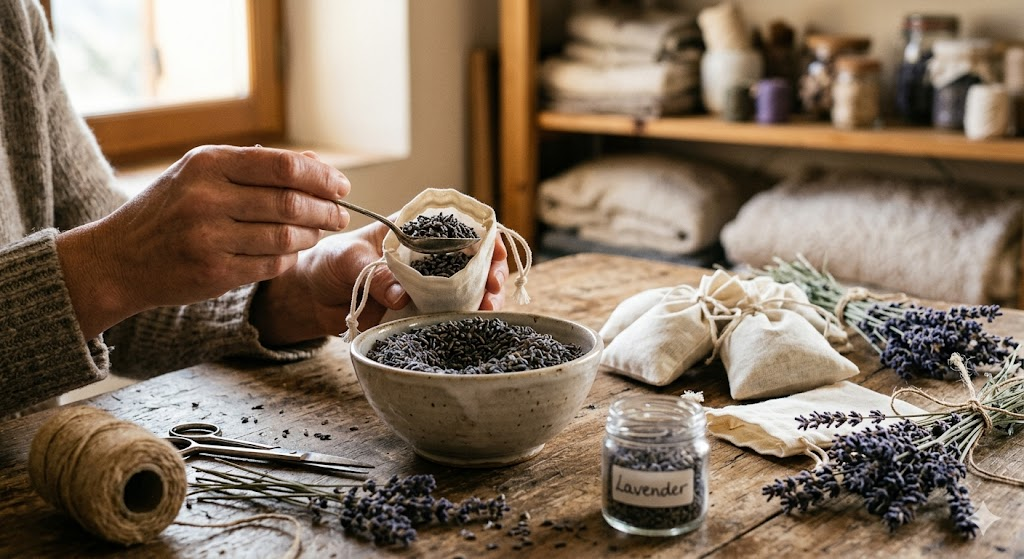
Creative Lavender Craft Ideas
Once you’ve mastered how to make lavender sachets, the possibilities are endless. These aren’t just for sock drawers.
- The Pillow Tuck: Make a flat, square sachet to slide inside your pillowcase for better sleep—one of the primary lavender sachet benefits.
- The Dryer Friend: Toss a sturdy cotton sachet into the dryer (no plastic bits!) to scent your clothes naturally.
- Gifting: Use vintage handkerchiefs to wrap the lavender and tie them with a velvet ribbon. This is a staple in my holiday gift baskets.
Professional Troubleshooting: What No One Tells You
After years of drying herbs for sachets, I’ve encountered a few weird issues. One year, my sachets smelled “dusty” or like old hay. I realized it was because I hadn’t cleaned the dust off the plants before drying. Now, I give the plants a very light misting with a hose the day before I harvest to ensure the flowers are clean.
Another tip: if you are preserving lavender flowers for a long time before making the sachets, store the loose buds in an airtight glass jar in a dark cupboard. Plastic bags can actually leach the oils out or make the buds smell like, well, plastic.
The Big Picture: Lavender Harvest and Drying
Mastering how to dry lavender flowers for sachets is a slow-living skill that pays off every time you open your linen closet. It connects you to the seasons and provides a chemical-free way to keep your home smelling like a French meadow. By focusing on the right variety, the perfect harvest window, and a patient drying process, you transform a simple plant into a long-lasting household treasure.
Internal Resources
For more information on plant varieties and gardening tools, you can explore further on Google Search.
Frequently Asked Questions
How long do dried lavender sachets last?
Typically, a well-made sachet will stay fragrant for 1–2 years. If the scent fades, simply squeeze or “scrunch” the bag to break the dried flower buds and release more oils.
Can I dry lavender in the sun?
It is not recommended. Sunlight bleaches the color and evaporates the essential oils quickly. For the best results, dry your lavender in a dark, cool, dry place.
What is the best lavender for sachets to repel moths?
French Lavender (Lavandula x intermedia), specifically the ‘Grosso’ variety, is best for this. It contains higher levels of camphor, which is the natural compound that repels moths and other insects.
Can I use the leaves in my sachets too?
Yes! While the buds contain the most oil, the leaves are also fragrant. You can chop them up and add them to your mix for extra bulk and scent.
Do I need to wash the lavender before drying?
Generally, no. If you wash it, you risk introducing moisture that causes mold. If the plant is dusty, spray it with a hose the day before you plan to harvest so it has time to dry completely in the sun while still on the root.