Quick Answer
Lavender turns brown primarily due to root rot from overwatering, poor soil drainage, or incorrect pruning. To fix it, immediately stop watering, ensure your lavender is in a sandy, well-draining potting mix, and move it to a spot with at least 8 hours of full sun. Prune away dead, brittle stems—but never cut back into the old, leafless wood, as it won’t regrow.
My First Lavender Heartbreak: A Lesson in “Tough Love”
I still remember the first English Lavender I ever bought. It was a “Munstead” variety, vibrant and fragrant. Within three weeks, the silver-green foliage turned a dull, crispy brown from the bottom up. I did what most beginners do: I assumed it was thirsty and gave it more water. By the end of the month, the plant was a mushy, black mess.
That was my first encounter with root rot, and it taught me a vital lesson: Lavender doesn’t die from neglect; it dies from too much kindness. This plant is a Mediterranean native. It thrives in rocky, “poor” soil and blistering sun. To grow it successfully, you have to stop treating it like a pampered houseplant and start treating it like a rugged survivor.
In this guide, I’m sharing the troubleshooting secrets I’ve learned over a decade of trial and error—from the best watering method for lavender to identifying the exact moment a plant is beyond saving.
Identifying the Culprit: Why Is My Lavender Turning Brown?
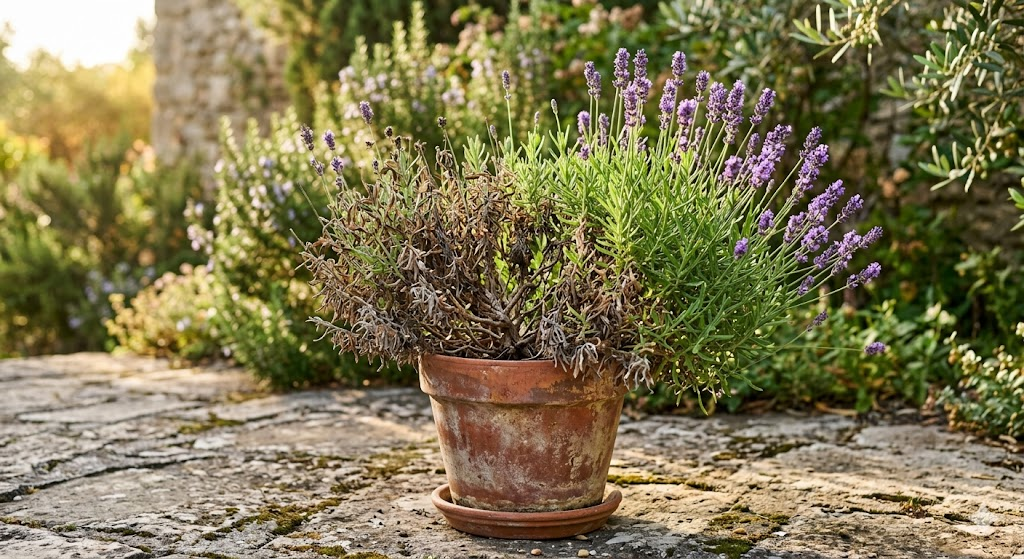
When a lavender plant is browning leaves, it’s sending a distress signal. However, “brown” can mean two very different things depending on the texture of the plant.
1. The Soggy Brown (Root Rot)
If the stems feel soft, the leaves look drooping or wilting, and the browning starts from the bottom and moves upward, you are likely dealing with a lavender plant fungal infection. This is almost always caused by “wet feet.”
2. The Brittle Brown (Under-watering or Winter Burn)
If the leaves are lavender plant dry leaves that crumble when touched, the plant might be dehydrated. While rare for established plants, new transplants or those in tiny pots can dry out in extreme heat.
3. The “Center-Out” Brown (Aging and Pruning)
If the middle of the bush looks like a bunch of dead sticks while the tips are green, this is a natural aging process. However, it’s often made worse by using the wrong pruning technique for lavender.
The Foundation: Getting the Soil and Pot Right
I used to use standard “all-purpose” potting soil. That was a mistake. Standard soil holds too much moisture. If you want to avoid lavender plant yellowing leaves, you need a mix that drains almost instantly.
The Best Soil for Lavender in Pots
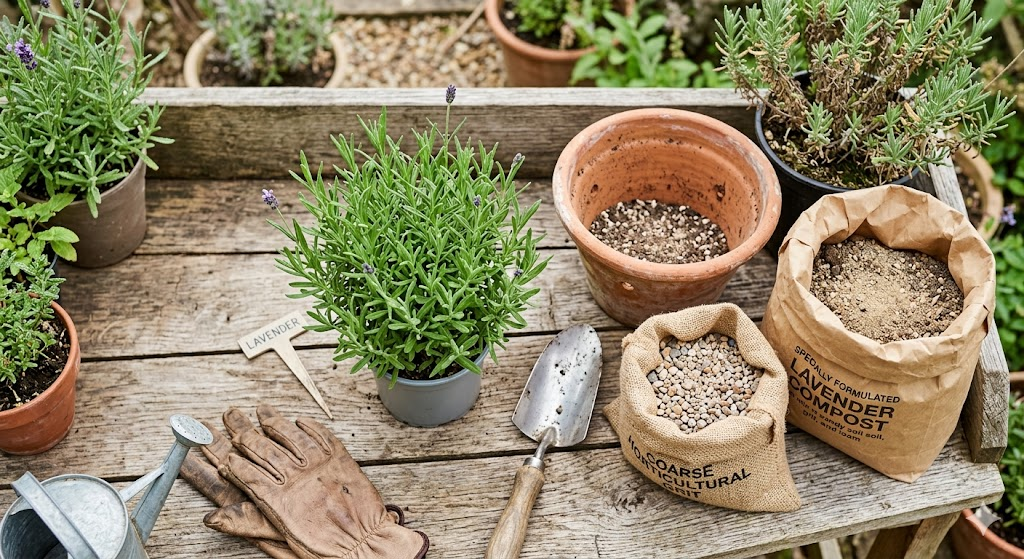
The secret recipe I use is a 70/30 mix: 70% high-quality potting soil and 30% horticultural grit, perlite, or coarse sand. This creates the “lean” environment lavender craves.
The Best Pot for Lavender Plant
Forget plastic or glazed ceramic pots. They trap moisture. The best pot for lavender plant is always unglazed terracotta. Terracotta is porous; it allows the soil to “breathe” and helps excess water evaporate through the sides of the pot. Ensure it has at least one large drainage hole—if it’s clogged with debris, your plant is a goner.
Master the “Drought and Drench” Watering Method
Watering is where most people fail. I used to water my lavender every morning with my other flowers. Don’t do that.
The Best Watering Method for Lavender
Use the “soak and dry” approach. Stick your finger two inches into the soil. If it feels even slightly damp, do not water. If it’s bone dry, give it a deep soak until water runs out of the drainage holes.
Pro Tip: The best time to water lavender is early morning. This allows any water that splashes onto the foliage to dry out during the day, preventing fungal spores from taking hold. Watering at night is an invitation for mildew.
Finding the Best Location: The Sun Factor
I once tried growing lavender plant care indoors on a bookshelf. It lasted two weeks. Even near a window, indoor light is rarely enough.
The best location for lavender plant is a spot that gets 8 to 10 hours of direct, unfiltered sunlight. If your lavender is turning brown and reaching toward the light (getting “leggy”), it’s starving for UV rays. Without enough sun, the plant can’t process water fast enough, leading to—you guessed it—root rot.
How to Fix Root Rot: The Last-Ditch Effort
If you suspect your plant is dying from overwatering, you have to act fast.
- Remove the plant: Gently lift the lavender out of its pot.
- Inspect the roots: Healthy roots are white or tan and firm. Rotting roots are black, slimy, and smell like compost.
- The Surgery: Use sterilized snips to cut away the black roots.
- Fungicide: Apply the best fungicide for lavender root rot, which usually contains copper or sulfur, to the remaining root ball.
- Repot: Place it in fresh, dry, sandy soil. Do not water it for at least three days.
Pruning: The “Don’ts” of Lavender Care
One of my biggest failures was “hacking” back a brown lavender bush. I thought if I cut it to the ground, it would come back like a rose. It didn’t.
Best Pruning Technique for Lavender
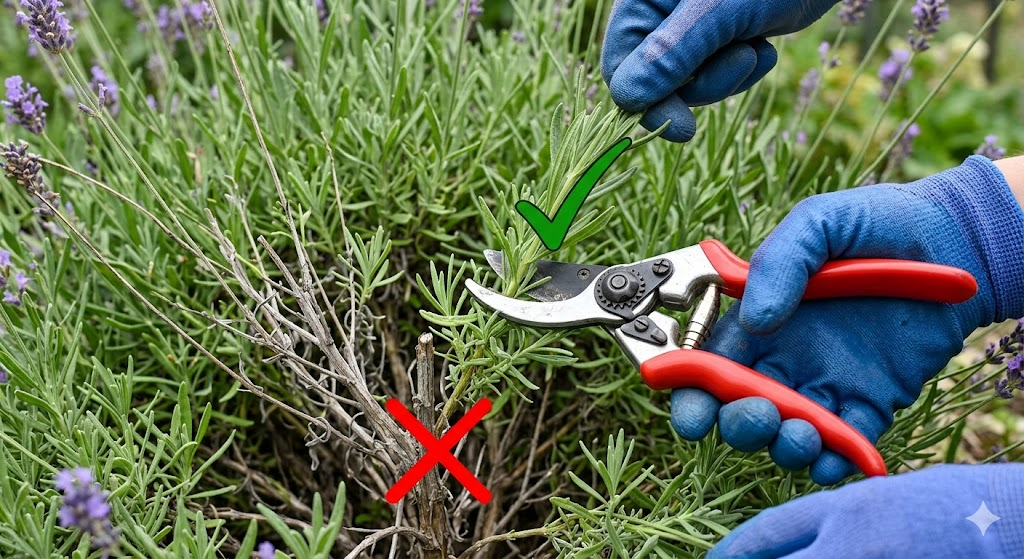
Lavender is a “sub-shrub.” It has a woody base. If you cut into that old, grey, leafless wood, it will never grow back. To fix a browning, messy plant:
- Trim only the green stems: Cut back about one-third of the green growth in late summer or early autumn.
- Avoid the wood: Always leave at least two inches of green growth above the woody base.
- Shape it: Aim for a mound shape to allow air to circulate through the center of the plant.
Fertilizer: Less is More
Many gardeners ask about the best fertilizer for lavender plants. Here is the honest truth: Lavender hates fertilizer. In the wild, it grows in lime-rich, nutrient-poor soil. Adding heavy nitrogen fertilizer will give you lots of weak green growth that turns brown and floppy at the first sign of heat.
If you feel you must feed it, use a tiny bit of organic compost or a very diluted, low-nitrogen liquid feed once in the spring. That’s it.
Troubleshooting Other Issues
Lavender Plant Pests
While lavender is naturally pest-resistant (thanks to those essential oils!), it can occasionally attract spittlebugs (which look like bubbles on the stems) or aphids. Usually, a strong blast of water from the hose is enough to dislodge them.
Dealing with Winter
If you live in a cold climate, your lavender might turn brown in winter. This is often “winter burn” from cold winds. Use a light mulch of pea gravel (not wood mulch!) to protect the roots and reflect heat up into the plant.
Summary Checklist for a Thriving Lavender
| Feature | The “Gold Standard” Requirement |
|---|---|
| Light | 8+ Hours of Direct Sun |
| Soil | 30% Grit / 70% Sandy Soil |
| Pot Type | Unglazed Terracotta |
| Watering | Only when the top 2 inches are dry |
| Pruning | Cut green growth; never touch the wood |
Managing a browning lavender is all about observation. When I stopped worrying about “feeding” my plants and started focusing on “draining” them, my garden transformed. If your plant is currently browning, don’t panic. Check the moisture, check the sun, and remember: with lavender, less is almost always more.
Frequently Asked Questions
Can a brown lavender plant be saved?
Yes, if the browning is caused by underwatering or minor fungal issues. However, if the entire root system is black and mushy, it may be too late. Try repotting in dry, sandy soil immediately.
Why is my indoor lavender turning brown?
Lavender struggles indoors because of low light and poor air circulation. Lavender plant care indoors requires a very bright south-facing window and careful monitoring to ensure the soil doesn’t stay damp.
What is the best fungicide for lavender?
For root-based issues, copper-based fungicides are often recommended. However, the best “cure” is improving drainage and reducing water.
How do I stop my lavender from drooping?
Lavender plant drooping or lavender plant wilting is usually the first sign of overwatering. Check the soil moisture immediately. If it’s wet, let it dry out completely before watering again.
Should I cut off the brown parts?
Yes, you can prune away dead, brown leaves and stems to improve air circulation, provided you do not cut into the old, hard wood of the plant.
Need more specific help? Search Google for more lavender care tips