Quick Answer
The best organic lavender plant fertilizer is one that provides low nitrogen and high phosphorus/potassium, such as bone meal, kelp meal, or well-aged compost. Lavender thrives in “lean” soil; over-fertilizing leads to leggy growth and root rot. For optimal health, apply a slow-release organic amendment once in early spring.
My Journey with the “Fussy” Purple Herb
I’ll be honest: the first time I tried growing lavender, I killed it with kindness. I treated it like my prize tomatoes, piling on rich compost and liquid fertilizers every two weeks. By July, my plants weren’t a sea of purple; they were a mushy, yellowing mess. That was my first big lesson in organic lavender plant fertilizer: less is almost always more.
Understanding Lavender’s Unique Diet
Before we talk about the best organic lavender fertilizer for blooms, we have to understand what this plant actually craves. It doesn’t want a buffet; it wants a light snack.
The N-P-K Balance
Most general-purpose fertilizers use a high N-P-K ratio (Nitrogen, Phosphorus, Potassium). For lavender, high nitrogen (the first number) is the enemy. It creates lush green leaves but zero flowers. We want natural lavender plant food that focuses on the P and K to strengthen the roots and push out those purple spikes.
The Role of pH
Lavender is a “calciphile”—it loves lime. If your soil is too acidic, no amount of organic herb fertilizer will help because the plant won’t be able to “eat.” I always tell beginners to test their soil first. If you’re below a pH of 6.5, adding a bit of garden lime or crushed oyster shells is the best “fertilizer” you can provide.
Best Organic Fertilizer for Lavender in Ground
When planting in the garden, your goal is to build long-term soil health rather than giving the plant a quick “sugar hit.”
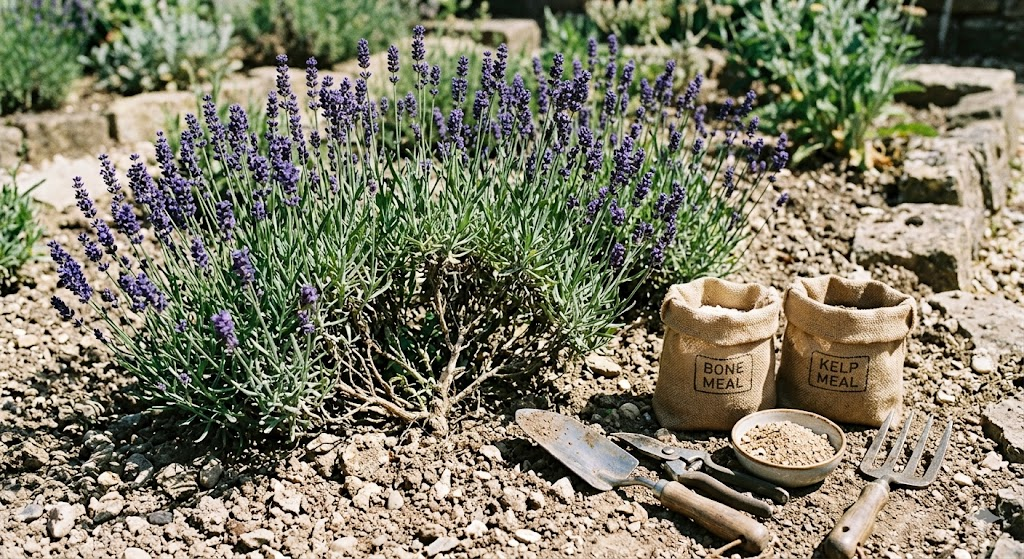
In my garden, I rely on organic soil amendments for lavender rather than bottled liquids. In early April, just as the new green growth starts to peek out, I scratch a handful of bone meal and a thin layer of well-aged compost into the top inch of soil.
Pro Tip: Avoid “hot” compost or fresh manure. These are too high in nitrogen and can burn the sensitive crown of the lavender. I learned this the hard way when a batch of “fresh” chicken manure turned my Hidcote lavender into a pile of brown sticks in forty-eight hours. Stick to compost that looks and smells like dark, earthy “crumbled chocolate cake.”
Best Organic Fertilizer for Lavender in Pots
Potted lavender is a different beast. Because you’re watering more frequently, nutrients leach out of the bottom of the pot. This is where the best organic lavender food for healthy growth becomes vital.
For my containers, I use a two-step approach:
- The Foundation: Use a best organic slow release fertilizer for lavender, like alfalfa meal or a dedicated organic “Bulb Food.” These break down slowly over 3–4 months.
- The Boost: Every 6 weeks during the growing season, I use a diluted best organic liquid fertilizer for lavender. I prefer a liquid kelp or seaweed extract. It’s low in nitrogen but packed with trace minerals that help the plant handle the stress of being in a pot.
The Drainage Secret
If you’re growing in pots, the fertilizer won’t matter if the roots are drowning. I always mix 25% horticultural grit or perlite into my potting soil. This ensures the lavender plant nutrients organic sources reach the roots without causing rot.
The “Information Gain” Secret: The Lavender Tonic
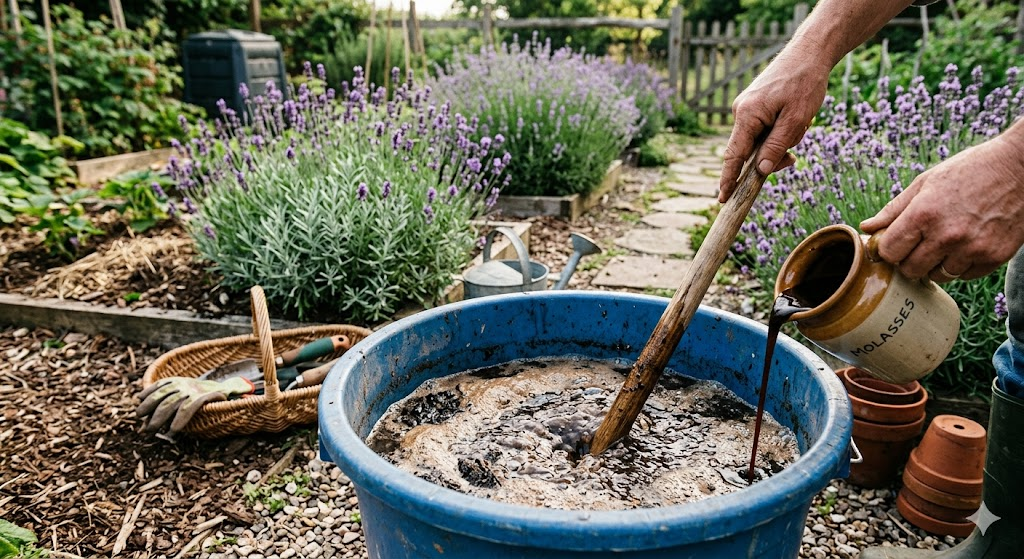
Most blogs will tell you to just buy a bag of fertilizer. But after years of trial and error, I’ve found that a lavender organic plant tonic made from lavender compost tea is the “secret sauce” for massive blooms.
Here is how I make it:
- Fill a bucket with rainwater.
- Add two cups of high-quality worm castings (the ultimate eco-friendly lavender fertilizer).
- Add a tablespoon of unsulphured blackstrap molasses (to feed the soil microbes).
- Let it steep for 24 hours, stirring occasionally.
- Dilute it until it looks like weak tea and pour it at the base of the plant.
This doesn’t just feed the plant; it “wakes up” the biology in the soil. I noticed that my plants treated with this tea had significantly stronger stems, which meant they didn’t “flop” over after a heavy rain.
Best Organic Lavender Fertilizer for Beginners
If you are just starting out, don’t overthink it. The best organic lavender fertilizer for beginners is actually Rock Dust (Azomite) combined with a little bit of Kelp Meal.
Why? Because you can’t really “mess it up.” Rock dust provides minerals without shifting the nitrogen levels. It strengthens the cell walls of the plant, making it more resistant to pests and cold winters. I’ve seen beginners dump “Miracle-Gro” on lavender and wonder why it died by August. If you stick to minerals and kelp, your lavender will be much hardier.
Seasonal Timing: When to Feed
One of the biggest mistakes I see is fertilizing in the fall. Never fertilize lavender in late autumn. This encourages new, tender growth that will be killed by the first frost, which can lead to the death of the entire plant.
| Season | Action | Fertilizer Type |
| Early Spring | Wake-up call | Slow-release organic granules (Bone meal/Kelp) |
| Late Spring | Bloom Prep | Light dusting of compost or worm castings |
| Summer | Maintenance | Optional liquid seaweed (for pots only) |
| Fall/Winter | Rest | None (Just a light mulch of pea gravel) |
Troubleshooting: Signs of Over-Fertilizing
How do you know if you’ve gone too far? As a “recovered” over-fertilizer, I look for these signs:
- Yellowing lower leaves: This often looks like a water issue, but it’s frequently a sign of salt buildup from too much fertilizer.
- Lack of scent: If you rub the leaves and they don’t smell strong, you’ve likely pushed too much nitrogen.
- Leggy, “floppy” stems: Lavender should be sturdy. If it’s falling open in the middle, stop the feeding immediately.
To fix this, I usually “flush” the soil with plenty of water (if drainage is good) and then top-dress with some coarse sand to help balance the soil texture.
The Environmental Impact of Going Organic
Choosing an organic lavender plant fertilizer isn’t just about the plant; it’s about the bees. Lavender is a pollinator magnet. Synthetic fertilizers can disrupt the soil microbiome and, in some cases, leave residues that aren’t great for the bees and butterflies visiting the flowers. By using natural sources like kelp, bone meal, and compost, you’re creating a mini-ecosystem in your backyard that supports the entire lifecycle of your local wildlife.
Summary of My Recommendations
If you want those deep purple, fragrant spikes that make the neighbors jealous, follow my “Minimalist Pro” routine:
- Spring: A light sprinkle of bone meal and kelp.
- Soil: Ensure a pH of 6.5–7.5 with lime if needed.
- Water: Deeply but infrequently.
- Avoid: High-nitrogen “all-purpose” plant foods.
Growing lavender is a lesson in patience and restraint. It took me three years to realize that the more I ignored my lavender (within reason), the better it performed. Give it the right organic lavender plant fertilizer once a year, ensure it has “wet feet” never, and it will reward you with a decade of fragrance.
Expert FAQ
Can I use coffee grounds on lavender?
I get asked this a lot. The short answer is no. Coffee grounds are acidic and high in nitrogen. Lavender wants alkaline soil and low nitrogen. Save the coffee grounds for your blueberries or hydrangeas!
Is Epsom salt good for lavender?
Occasionally, yes. Epsom salt provides magnesium. If your leaves are looking a bit pale despite correct watering, a tablespoon of Epsom salt dissolved in a gallon of water can help. But don’t do it more than once a year.
What is the best fertilizer for French vs. English lavender?
English lavender (L. angustifolia) is heartier and needs almost no fertilizer. French/Spanish lavender (L. stoechas) is a bit hungrier and benefits more from that mid-summer liquid kelp “snack,” especially since it blooms for a longer period.